Sizing a deaerator is one of the most overlooked steps in boiler system design, yet it directly determines how long your tubes last and how reliably your plant runs. This guide walks through the calculations and decisions needed to size a deaerator correctly, from feedwater flow to storage capacity to venting rate. Get these numbers right, and you protect your boiler for decades. Get them wrong, and you invite corrosion, downtime, and expensive retrofits.
Why Deaerator Sizing Matters
A boiler deaerator is not a piece of equipment you size by guesswork. It removes dissolved oxygen and carbon dioxide from boiler feedwater before that water ever reaches the boiler drum. Get the sizing wrong, and you invite corrosion, pitting, and premature tube failure.
Boiler systems rely on the deaerator to protect thousands of dollars in downstream equipment. A properly sized unit keeps dissolved oxygen below 0.005 cc/L (7 ppb) in most industrial applications. That single number drives nearly every design decision that follows.
Key Takeaway:
Oxygen content, not guesswork, should drive every deaerator sizing decision. Keeping dissolved oxygen below 0.005 cc/L protects your boiler tubes from corrosion and pitting. This single target shapes nearly every calculation that follows in the sizing process.
Steps in Sizing a Deaerator
Step 1: Determine Maximum Feedwater Flow Rate
The first and most important number in deaerator sizing is your boiler’s maximum continuous feedwater demand, measured in gallons per minute (GPM) or pounds per hour (lb/hr). This is not the average operating load. It is the worst-case scenario your system must handle.
To find this number, add the maximum steam output of every boiler the deaerator will serve. Then factor in blowdown losses, typically 2 to 5 percent of total steam production.
- Identify each boiler’s maximum continuous rating (MCR) in lb/hr of steam.
- Convert steam demand to feedwater demand using a 1:1 mass basis, adjusted for blowdown.
- Add makeup water requirements from any process losses or condensate return deficits.
- Sum all values to get total required feedwater flow through the deaerator.
If you run multiple boilers off one deaerator, size for the combined peak, not the sum of average loads. Boilers rarely peak at the exact same moment, but a well-designed system plans for that possibility.
Key Takeaway:
Size for your boiler’s peak demand, not its average load. Add the maximum continuous rating of every boiler served, then factor in blowdown and makeup water losses. If multiple boilers share one deaerator, always size for their combined peak rather than their typical running load.
Step 2: Choose the Deaerator Type
Deaerators generally fall into two categories, and your choice affects sizing and performance. Spray-type deaerators atomize incoming water through nozzles into a steam atmosphere. Tray-type deaerators cascade water over trays for extended steam contact time.
Tray-type units handle larger capacities and offer more forgiving turndown ranges. Spray-type units are more compact and often preferred for smaller or space-constrained installations.
- Spray-type: Best for smaller systems, faster response, lower installation footprint.
- Tray-type: Best for large industrial loads, more stable performance under varying flow.
- Spray-tray combination: Common in mid-to-large systems needing both fast deoxygenation and storage stability.
Your vendor’s performance curves differ by type, so confirm the oxygen removal guarantee applies to your actual flow range, not just the nameplate maximum.
Key Takeaway:
Spray-type suits smaller systems; tray-type suits large, variable loads. Spray-type units are compact and respond quickly, making them a good fit for space-constrained plants. Tray-type units handle bigger capacities with more forgiving turndown, which matters most for larger industrial operations.
Step 3: Calculate Required Storage Capacity
Storage capacity sits below the deaerator’s deaeration section and holds treated feedwater ready for the boiler feed pumps. This tank must bridge the gap between water treatment and pump demand during load swings.
The industry standard is to size storage for 10 to 20 minutes of feedwater at maximum flow. Critical processes or plants without reliable backup water sources often push toward the higher end of that range.
- Multiply maximum feedwater flow (GPM) by desired storage time in minutes.
- Add a safety margin of 10 to 15 percent for unexpected demand spikes.
- Consider local water quality and the reliability of backup supply when choosing storage duration.
- Verify that the tank dimensions fit within existing mechanical room clearances before finalizing the order.
A tank that is too small forces frequent cycling and can starve boiler feed pumps during transient loads. An oversized tank adds unnecessary cost and structural loading to your mechanical room floor.
Key Takeaway:
Plan for 10 to 20 minutes of feedwater storage at maximum flow. This buffer bridges the gap between water treatment and pump demand during load swings. Undersized storage risks pump cavitation, while oversized storage adds unnecessary cost and floor loading.
Step 4: Size the Vent Condenser and Venting Rate
Every deaerator needs a vent to release oxygen, carbon dioxide, and non-condensable gases stripped from the feedwater. Undersized venting traps gases in the system and defeats the deaerator’s purpose.
Standard practice ties venting rate to a percentage of total steam supplied to the deaerator, often between 0.5 and 2 pounds of steam per 1,000 pounds of feedwater. Your vendor’s engineering data should specify the exact ratio for your operating pressure.
- Confirm that the vent rate scales with your maximum feedwater flow, not just the average flow.
- Check that the vent condenser can handle flash steam losses during startup.
- Ensure the vent line has enough capacity for both normal operation and upset conditions.
- Review manufacturer data sheets rather than relying on generic rules of thumb.
Key Takeaway:
Undersized venting traps gases and defeats the deaerator’s purpose. Vent rate should scale with maximum feedwater flow, not just average operating conditions. Always confirm capacity against manufacturer data rather than relying on generic rules of thumb.
Step 5: Factor In Operating Pressure and Temperature
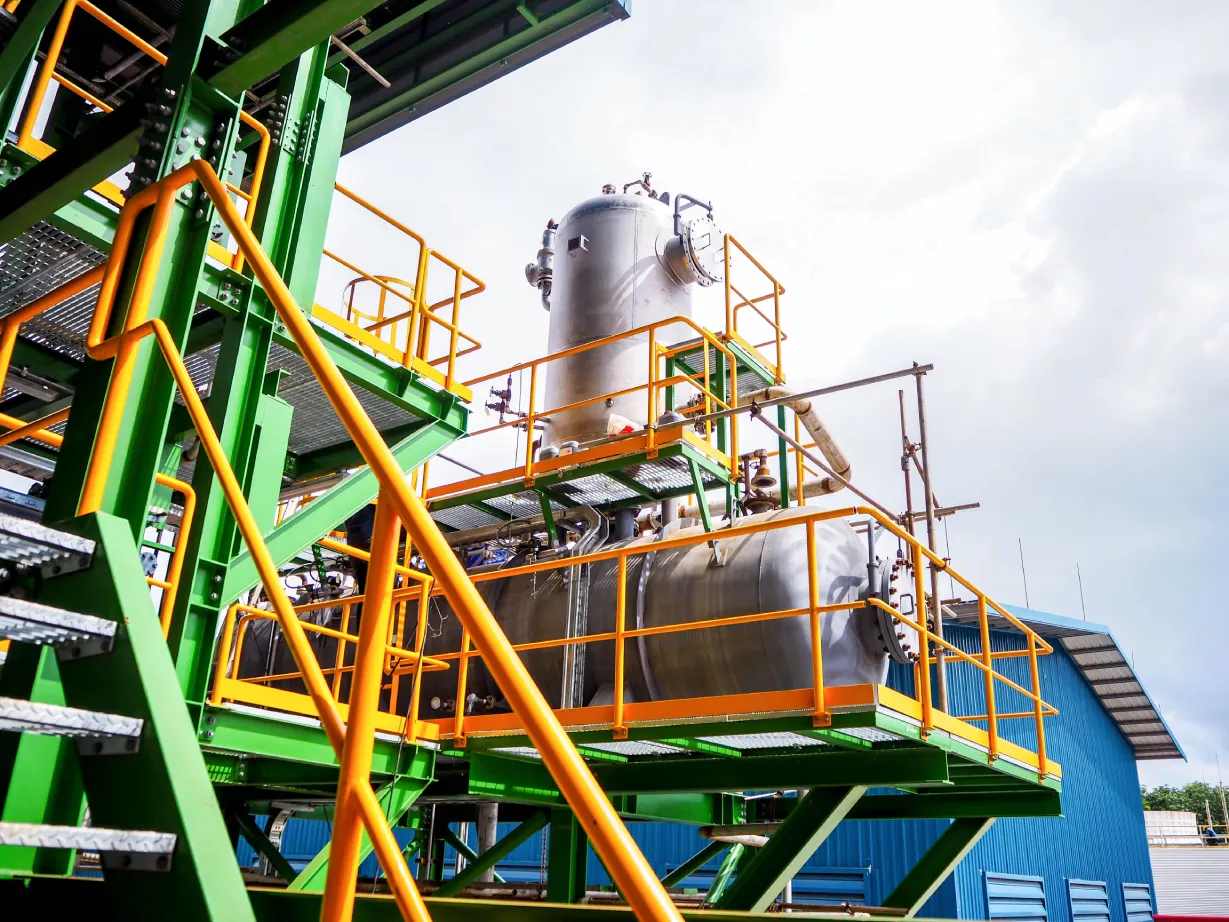
Deaerators typically operate between 5 and 15 psig, though some pressurized systems operate at higher pressures. Operating pressure directly affects the water’s saturation temperature, which in turn affects oxygen solubility and removal efficiency.
Higher pressure improves gas stripping efficiency but increases steam consumption. Lower pressure reduces steam usage but may struggle to hit ultra-low oxygen targets in high-purity applications.
- Match deaerator operating pressure to your steam supply pressure and plant steam balance.
- Confirm that the design temperature aligns with the boiler’s feedwater temperature requirements.
- Account for seasonal fluctuations in makeup water temperature, which affect the deaeration workload.
Key Takeaway:
Operating pressure controls the tradeoff between oxygen removal and steam use. Higher pressure improves gas stripping but burns more steam, while lower pressure saves steam but may struggle to hit strict purity targets. Match your deaerator’s pressure to your plant’s steam balance and feedwater requirements.
Step 6: Build In Growth and Redundancy
Sizing a deaerator strictly for today’s load is a common and costly mistake. Plants grow, add equipment, and increase steam demand faster than most capital plans anticipate.
A reasonable rule of thumb is to size for 15 to 25 percent above current maximum demand, assuming realistic growth projections. If your facility runs critical processes, consider whether a redundant deaerator or parallel train makes financial sense.
- Review five-year capacity plans before finalizing deaerator size.
- Discuss expansion scenarios with your process engineering team early.
- Weigh the cost of a larger unit now against the cost of a retrofit later.
- Consider modular designs that allow future capacity additions without full replacement.
Key Takeaway:
Size 15 to 25 percent above current demand to avoid a costly retrofit later. Plants tend to grow faster than capital plans anticipate, so building in headroom now saves money down the road. For critical processes, weigh whether a redundant deaerator or parallel train is worth the added investment.
Common Deaerator Sizing Mistakes to Avoid
Even experienced engineers fall into a few predictable traps when sizing deaerators. Recognizing these early saves budget and downtime later, since sizing errors often contribute to larger boiler failures down the road.
- Sizing for average load instead of peak load, which leaves the system unable to handle demand spikes.
- Ignoring blowdown and makeup water volumes, which understates true feedwater flow.
- Skipping vent rate verification, which allows oxygen carryover even in a “correctly sized” tank.
- Underestimating storage time, which creates pump cavitation risk during transient conditions.
- Failing to plan for future load growth, which forces an expensive replacement within a few years.
How Deaerator Sizing Affects Boiler Reliability
Feedwater oxygen content is the biggest driver of boiler tube corrosion in most industrial plants. A correctly sized deaerator keeps that number consistently low, even during load swings and startup transients.
Poor sizing shows up gradually, not immediately. Pitting corrosion, tube failures, and unplanned outages often trace back to an undersized deaerator from years earlier.
Key Takeaway:
Oxygen content is the single biggest driver of boiler tube corrosion. A correctly sized deaerator keeps that number low even through load swings and startup transients. Sizing mistakes often go unnoticed for years before manifesting as pitting or unplanned outages.
Frequently Asked Questions
Size your deaerator to match the combined maximum continuous feedwater demand of all boilers it serves, plus allowances for blowdown and makeup water. Add 15-25 percent for future growth before finalizing the model selection.
Most industrial deaerators are sized for 10 to 20 minutes of feedwater storage at maximum flow rate. Critical processes often use the higher end of that range for added reliability.
An undersized deaerator allows oxygen carryover into the boiler feedwater, which accelerates corrosion and pitting in boiler tubes. It can also cause feed pump cavitation during load swings.
Most industrial deaerators operate between 5 and 15 psig, though this varies depending on the plant’s steam balance and purity requirements. Higher pressure improves gas stripping but increases steam consumption.
Size for current maximum demand plus a growth margin of 15 to 25 percent. This avoids a costly early retrofit as plant steam demand increases over time.
Conclusion
Work through feedwater flow, storage time, and vent rate calculations methodically and confirm every assumption against manufacturer performance data. A properly sized deaerator protects your boiler system for decades, while a poorly sized one creates problems that surface long after the warranty expires.
Not sure your current deaerator matches your boiler’s real-world demand? Patriot Boiler can review your system specs and help you size, select, or retrofit the right deaerator for your plant. Reach out to Patriot Boiler today to protect your equipment before small oxygen problems turn into expensive tube failures.