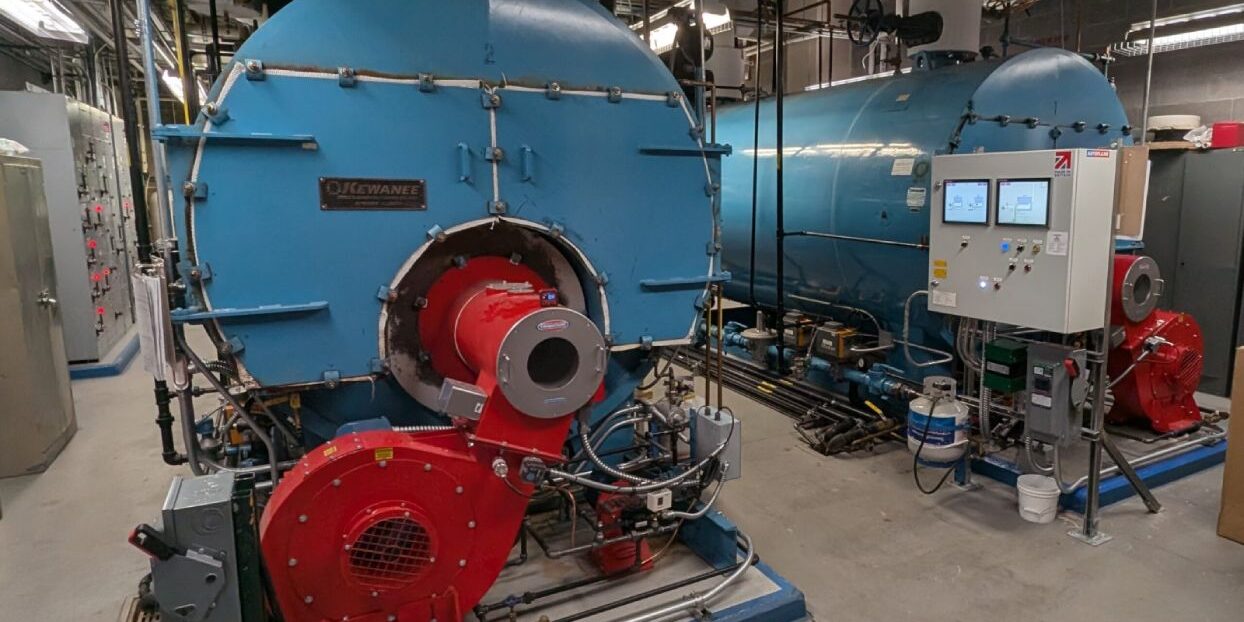
Commercial boiler water treatment is an essential service for Arizona facilities. It is the most important ongoing program for protecting heat exchanger integrity, maintaining fuel efficiency, and extending the life of a system that represents a significant capital investment. Without it, Arizona’s hard, high-TDS water will damage your boiler.
Why Arizona’s Water Makes Boiler Treatment Non-Negotiable
The combination of extremely hard feedwater, high total dissolved solids (TDS), and year-round demand creates a water chemistry environment that pushes Arizona commercial boilers toward scale, corrosion, and fouling faster than facilities in moderate-water regions. Over 90% of Arizona properties receive hard water. The mineral concentrations in the Valley’s municipal supply are exactly what boiler systems cannot handle without chemical intervention.
What untreated Arizona feedwater does to a commercial boiler:
- Limescale deposits on heat exchanger surfaces when calcium and magnesium carbonates leave the solution at high temperatures. This scale creates an insulating barrier, forcing the burner to run longer for the same output. Each millimeter of scale raises fuel consumption by about 7 percent.
- Oxygen-driven corrosion attacks the pressure vessel, steam drum, and distribution piping when dissolved oxygen in feedwater meets metal surfaces at high temperatures and pressures. Electrochemical reactions accelerate the damage.
- Silica scaling from dissolved silica in Arizona’s groundwater forms hard, glassy deposits on heat transfer surfaces. These are much harder to remove than carbonate scale.
- Condensate system corrosion happens when carbonic acid forms in steam condensate as carbon dioxide dissolves in water returning through the condensate line. This process corrodes return piping from the inside.
- Sludge and fouling build up in the mud drum and lower headers of water tube boilers when suspended solids and precipitation products collect. This buildup reduces circulation efficiency and causes localized overheating.
The Components of a Complete AZ Water Treatment Boiler Program
Effective AZ water treatment boiler programs tackle water chemistry from several angles at once. Relying on a single chemical never addresses all the threats Arizona’s water quality poses to commercial boiler systems.
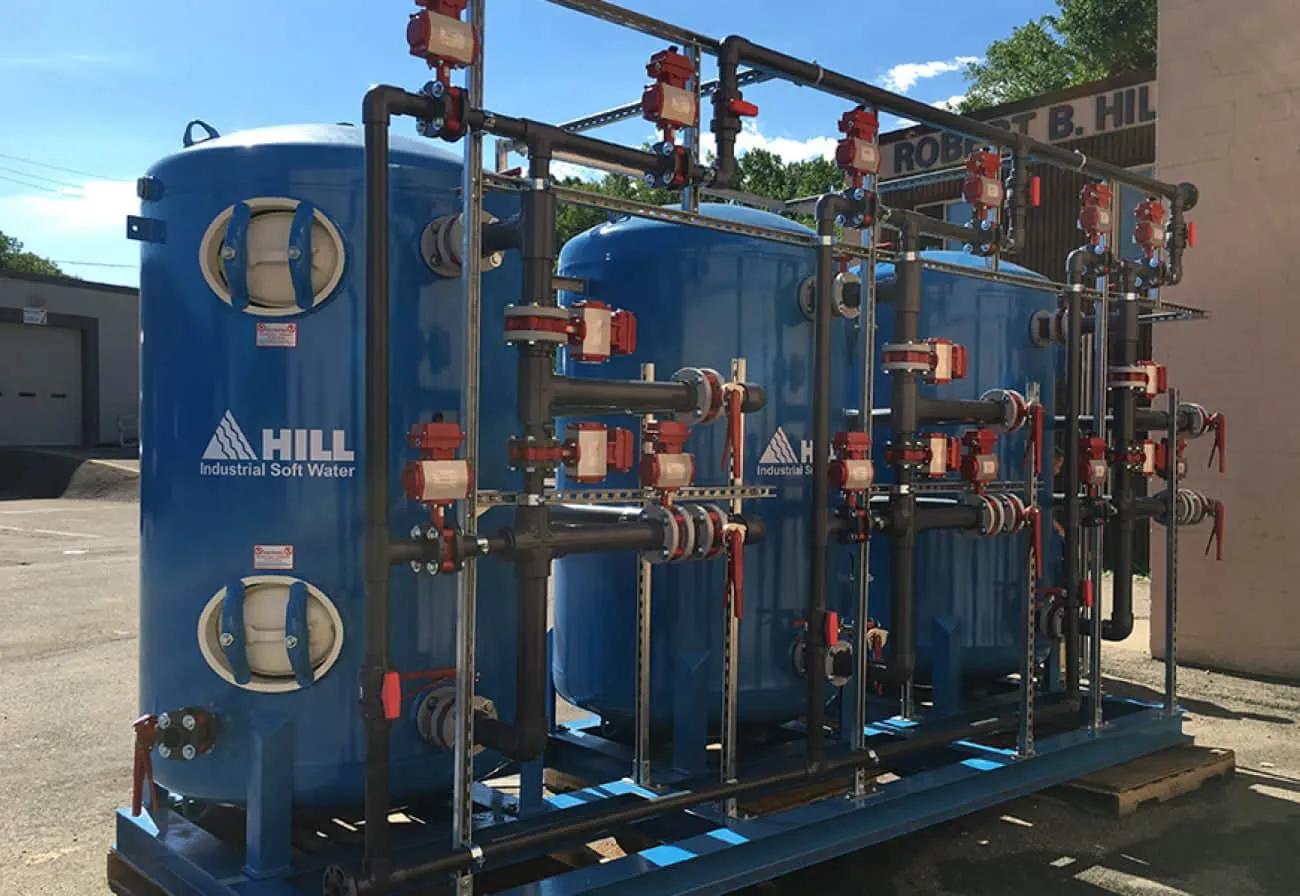
External pretreatment removes scale-forming minerals before feedwater enters the boiler. Water softening with ion exchange resin removes calcium and magnesium ions and replaces them with sodium, sharply reducing the hardness entering the system. Dealkalizers lower bicarbonate alkalinity that would otherwise become carbon dioxide in the steam system and turn into carbonic acid in the condensate return. For high-pressure boilers above 600 PSI, deaerators mechanically remove dissolved oxygen from feedwater before chemical oxygen scavengers target any remaining gas.
Internal chemical treatment manages boiler water chemistry using continuous or proportional chemical dosing.
A complete internal program for Arizona facilities typically includes:
- Scale inhibitors such as phosphates, phosphonates, and polymer dispersants prevent calcium and magnesium from forming hard crystalline deposits on heat transfer surfaces. They keep minerals suspended so they can be removed during blowdown.
- Oxygen scavengers like sodium sulfite or catalyzed sulfite neutralize dissolved oxygen before it reaches metal surfaces and causes corrosion.
- Alkalinity and pH control chemicals keep boiler water pH in the protective range of 10.5 to 12.0 for low-pressure systems. This minimizes corrosion rates and suppresses scale formation.
- Sludge conditioners and dispersants keep precipitation products mobile and easy to remove during scheduled blowdown instead of allowing them to build up as stubborn deposits.
- Condensate treatment uses filming or neutralizing amines to protect the return system from carbonic acid. These chemicals either form a protective film on pipe walls or neutralize acid-forming gases before they cause damage.
Blowdown is the controlled removal of concentrated boiler water to keep TDS from reaching levels that cause foaming, carryover, or scale. In Arizona’s hard water, Phoenix boiler treatment programs require more aggressive blowdown than facilities in softer regions. Continuous blowdown systems with heat recovery maintain target TDS and recover heat from discharged water. This reduces the efficiency loss that frequent blowdown would otherwise cause.
A commercial boiler water treatment program is only as effective as its monitoring component. Regular water analysis ensures chemical dosing stays on target, catches problems early, and delivers the documentation ADOSH compliance and insurance programs require.
Monitoring parameters for Arizona commercial boilers include:
- Feedwater hardness and TDS confirming softener performance
- Boiler water pH, alkalinity, and TDS verifying internal treatment effectiveness
- Sulfite or dissolved oxygen residual confirming adequate oxygen scavenger dosing
- Conductivity trending to optimize blowdown frequency and volume.
- Condensate pH and iron content indicate the return system corrosion status.
What Happens Without Treatment: The Arizona Cost Equation
The financial case for commercial boiler water treatment in Phoenix is clear when you compare it to the costs of deferred treatment. A commercial boiler without proper water treatment in Arizona’s hard water will build up scale, suffer corrosion damage, and need more frequent and costly repairs throughout its service life.
The documented costs of inadequate boiler water treatment:
- Every 1 mm of limescale on heat exchanger surfaces increases fuel consumption by about 7 percent. This means higher gas bills for systems that may run year-round.
- Heat exchanger replacement due to scale or thermal fatigue is one of the most expensive repairs in commercial boiler service. It often costs more than a full water treatment program over five years.
- Corrosion-induced pressure vessel failure triggers immediate ADOSH reporting, possible certificate blocking, and expensive emergency downtime. Only R Stamp-certified contractors can perform these repairs under regulatory oversight.
- Premature boiler replacement from untreated feedwater can reduce equipment service life by 30 to 50 percent compared to properly maintained systems.
Conclusion
Commercial boiler water treatment is the smartest investment for Arizona facility managers who want their systems to last. Hard water, high TDS, dissolved oxygen, silica, and constant demand put relentless pressure on untreated boilers. A complete program that includes external pretreatment, chemical dosing, disciplined blowdown, and regular water analysis protects heat exchanger integrity, maintains fuel efficiency, and prevents the corrosion and scale that force early replacement in Arizona’s challenging environment.
Patriot Boiler: Arizona’s Commercial Boiler Specialists
At Patriot Boiler, we see Arizona’s hard water damage every day. Scale-damaged heat exchangers, corroded pressure vessels, and fouled condensate lines are routine repairs across the Phoenix Metro and statewide. Our certified technicians assess your feedwater chemistry, design a treatment program tailored to your system, and monitor performance closely so issues are identified early, not during an emergency shutdown.