Planned shutdowns and unexpected failures both threaten facility uptime, and heating demand doesn’t pause for either one. A rental boiler in Arizona bridges that gap, whether a facility is mid-repair, waiting on a replacement unit, or covering a temporary spike in demand. This guide covers when rental solutions make sense, how sizing and deployment actually work, and what to check before signing a rental agreement.
When Facilities Need Rental Boiler Coverage in Arizona
Rental boiler in Arizona solve a handful of distinct problems, and each one comes with its own timeline and planning window.
- Planned maintenance shutdowns. Taking a primary boiler fully offline for major maintenance is one of the most common reasons facilities bring in rental coverage. A temporary unit keeps heating available while the maintenance team works without the pressure of restoring service quickly.
- Emergency replacement after sudden failure. When a boiler fails without warning, speed becomes the priority. Rental coverage fills the gap while a permanent repair or replacement is sourced and installed.
- Seasonal demand spikes. Some facilities see heating load exceed existing system capacity during specific periods of the year, and temporary rental capacity covers that spike without justifying a permanent capacity upgrade.
- Construction and renovation projects. Projects that temporarily disconnect a permanent system, whether for a facility expansion or a full mechanical room renovation, often rely on rental coverage to keep the facility operational throughout a longer timeline.
Each of these scenarios calls for a different response speed. Planned shutdowns allow time for careful sizing and site evaluation well in advance, often weeks before the actual disconnection date. Emergencies demand immediate deployment with far less lead time, sometimes measured in hours rather than days, which is exactly why establishing a rental relationship before a failure happens tends to save the most time when it counts. Facilities that wait until an emergency is already underway to start researching rental options lose valuable hours to a process that could have been handled in advance.
Different Fire, Different Response
A planned shutdown and a 2am equipment failure are not the same emergency, and they shouldn't get the same response plan. Knowing which scenario applies ahead of time is what makes fast actually mean fast.
Sizing and Configuring the Right Rental Boiler Unit in Arizona
A rental boiler unit in Arizona only helps a facility if it actually matches that facility’s load. Undersized units fail to meet demand, and oversized units burn fuel unnecessarily while sitting on space the facility may not have to spare. Getting this calculation right the first time avoids costly delays during an already stressful situation, whether the deployment is planned or urgent.
A proper sizing and configuration process typically covers:
- Load calculation. Matching rental capacity to the facility’s actual peak heating demand, not a general estimate based on facility size alone.
- Fuel type compatibility. Confirming the rental unit’s fuel source matches available site infrastructure, whether that’s natural gas, propane, or another supply.
- Pressure and connection requirements. Verifying the rental unit’s pressure rating and connection points align with existing piping and equipment.
- Available space. Confirming the physical footprint required for the unit fits the site, including clearance for maintenance access and safety code requirements.
- Utility hookups. Checking that electrical and water connections at the site can support the rental unit without additional infrastructure work.
Two general configurations cover most rental scenarios:
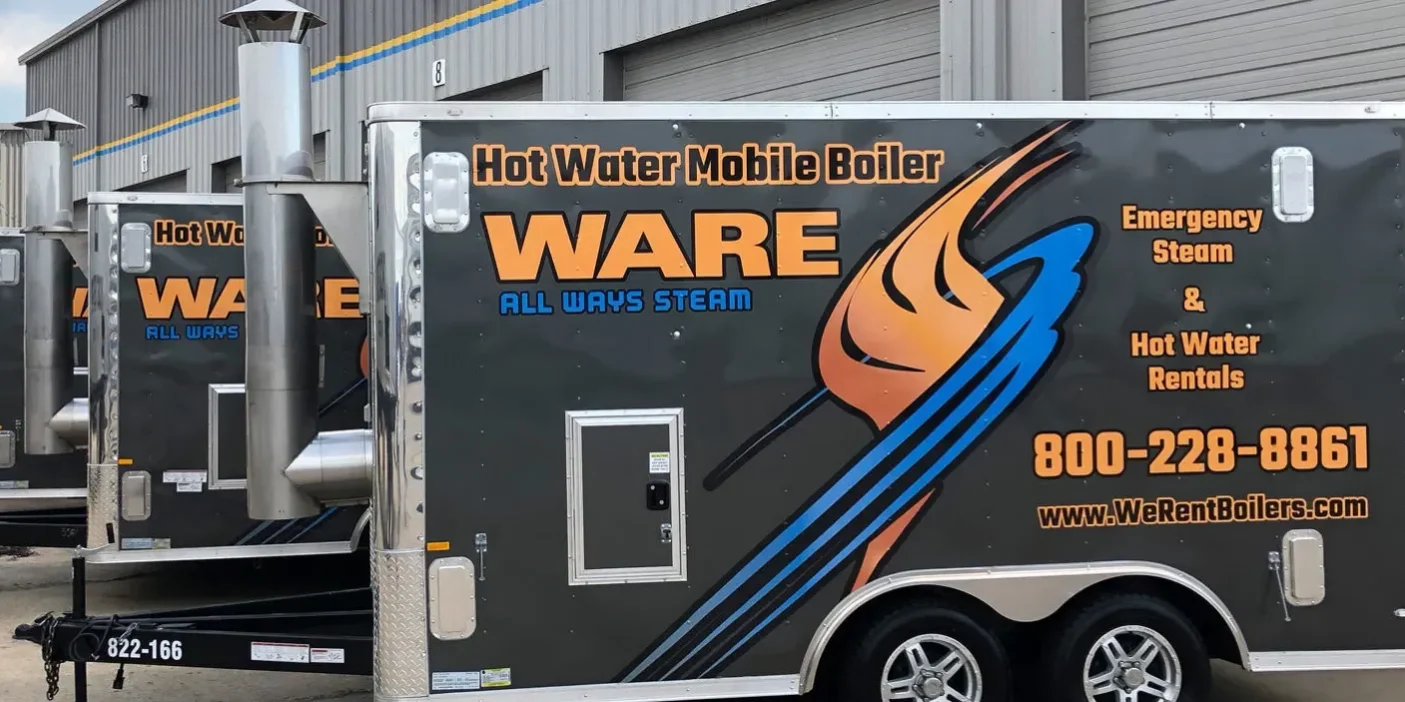
- Trailer-mounted units. These offer faster deployment and easier relocation between projects, making them a strong fit for shorter-term or emergency deployments.
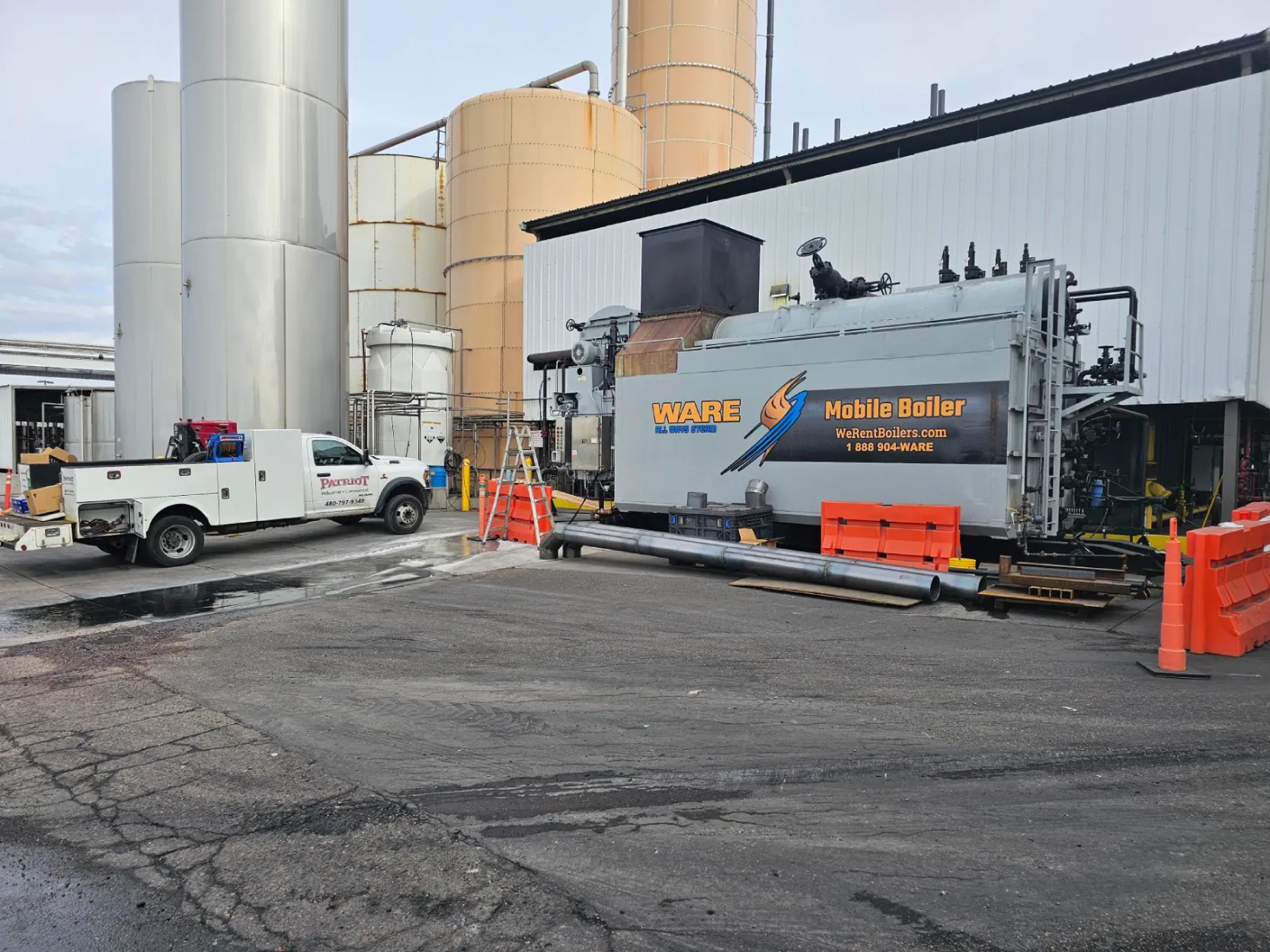
- Skid-mounted units. These typically provide a more permanent footprint and often suit longer rental durations better than a trailer-mounted setup.
Site-specific factors like available space and utility hookups shape which configuration and unit size actually fit a given facility, which is why this evaluation happens during the planning conversation and not after a unit has already arrived on site.
Right Size, Right Fit
An oversized boiler wastes fuel, an undersized one leaves rooms cold, and the wrong mount type creates problems before the unit is even connected. Getting all three right up front is what actually saves time later.
Fast Deployment and Safe Connection to Existing Infrastructure
When a primary boiler fails unexpectedly, speed becomes the top priority, particularly for facilities with critical operations like hospitals and manufacturing plants where heating loss carries real operational risk. Facilities that establish a rental relationship before an emergency happens shorten response time significantly when every hour of downtime matters.
A well-run deployment generally moves through the same sequence regardless of urgency:
- Confirming facility load requirements and available site access.
- Selecting and dispatching the appropriately sized rental unit.
- Connecting piping, electrical, and safety systems to existing infrastructure.
- Testing the connection before handing operational control back to facility staff.
Connecting a rental unit safely requires technicians experienced with commercial systems, since piping, electrical, and safety connections all need to integrate correctly with what’s already in place. This process is designed to minimize additional downtime during the swap, and facility staff coordinating closely with the rental team on access and site-specific requirements ahead of arrival tends to make the difference between a smooth connection and a delayed one.
The Clock Starts at the Call
Every hour a facility runs without heat is an hour of operational risk, not just discomfort. A rental relationship set up before an emergency is what actually shortens that clock when it matters.
Cost, Permitting, and Insurance Considerations
Rental costs depend on unit size, duration, and installation complexity, and the most useful comparison isn’t the rental rate on its own, it’s the rental rate against the true cost of extended downtime. In most cases, rental coverage proves far less expensive than a prolonged shutdown once lost operations, spoiled inventory, or compliance exposure are factored in. Longer rental terms sometimes qualify for adjusted pricing, which is worth raising directly during initial planning for extended projects.
A few practical items worth confirming before signing a rental agreement:
- Permitting requirements. Some jurisdictions require permits or notifications for temporary boiler equipment, even for short-term deployments, so confirming local requirements before a unit arrives avoids delays that could offset the speed advantage of choosing a rental solution in the first place. Emergency deployments sometimes qualify for expedited permitting given the urgent nature of the situation.
- Insurance responsibility. Rental agreements should clearly outline whether the facility’s own policy or the boiler rental provider’s policy covers the equipment during the rental period.
- Installation and removal liability. Liability during the connection and disconnection process should be addressed clearly within the contract terms, not assumed.
- Pricing structure. Confirming whether pricing is flat, tiered by duration, or adjusted for extended terms helps avoid budgeting surprises partway through a longer deployment.
Understanding these details in advance prevents confusion or disputes if any issue arises during the rental period, and it turns what could be a reactive scramble into a planned, budgeted decision. Facility managers who bring these questions into the initial conversation, rather than raising them after a contract is already signed, tend to avoid the kind of mid-deployment disputes that slow down an otherwise straightforward rental.
Read the Fine Print Before the Cold Snap
The rental rate is only part of the real cost picture, permits and insurance responsibility are the parts that cause headaches later. Confirming all three upfront turns a rental into a plan instead of a scramble.
Maintenance, Communication, and Transitioning Back to Permanent Equipment
A rental deployment isn’t a set-it-and-forget-it arrangement, particularly for longer terms. Units deployed for extended periods still need routine maintenance attention during their service, and facility managers should clarify maintenance responsibilities and included services before finalizing a long-term rental agreement so there’s no confusion later about who handles routine service.
Clear communication throughout the deployment matters just as much as the equipment itself. A few practices that keep a deployment running smoothly:
- A single point of contact. One dedicated contact for the rental deployment simplifies coordination and speeds up any adjustments needed during the rental period.
- Early check-ins. A brief check-in during the first few days after connection helps confirm the unit is performing as expected before small issues become bigger ones.
- Documented maintenance responsibilities. Written clarity on who handles routine service prevents gaps in coverage during a longer deployment.
- A planned transition timeline. Facility managers should plan the transition back to permanent equipment well before the rental period ends, rather than waiting until the deadline is close.
Eventually, most rental deployments transition back to a permanent boiler solution, whether repaired or newly installed. Coordinating this handoff smoothly, with the transition timeline planned in advance, avoids the kind of last-minute scrambling that a poorly planned rental arrangement can create.
A Rental Boiler in Arizona Is a Bridge, Not a Destination
The best rental deployments are the ones facility staff barely notice, because someone planned the exit before the entrance. Confirming the transition date early is what keeps the bridge from becoming permanent by accident.
Frequently Asked Questions
Deployment speed depends heavily on unit size and site readiness. A facility that has already confirmed load requirements, site access, and permitting ahead of time can typically connect a rental unit far faster than one starting that process from scratch during an active emergency, which is why establishing a rental relationship in advance matters more than the equipment itself.
Yes, rental boilers support both scenarios, though the planning process differs. Planned shutdowns allow time for a detailed sizing conversation and site evaluation well ahead of the deployment date, while emergency deployments compress that same process into hours rather than weeks.
Sizing comes down to a load calculation based on the facility’s actual peak heating demand, not a general estimate based on square footage. Fuel type, pressure requirements, and connection compatibility with existing infrastructure all factor into which unit ultimately gets dispatched.
Trailer-mounted units deploy faster and relocate more easily, which suits shorter-term or emergency needs. Skid-mounted units typically offer a more permanent footprint and tend to fit longer-term rental arrangements better, particularly when the deployment spans a multi-month project.
Some jurisdictions require permits or notifications even for temporary equipment, so this is worth confirming with local authorities before a unit arrives on site. Emergency deployments sometimes qualify for expedited permitting given the urgency involved, but that shouldn’t be assumed without confirming it directly.
This should be spelled out clearly in the rental agreement rather than left as an assumption. Some agreements place coverage responsibility on the facility’s own policy, while others cover the equipment under the rental provider’s policy, and liability during installation and removal should be addressed separately within the same contract.
Contact Patriot Boiler to discuss rental boiler coverage in Arizona before you need it.
Patriot Boiler
Arizona's Commercial Boiler Experts
Rental boiler give Arizona facilities a reliable way to maintain operations during both planned projects and unexpected failures. Patriot Boiler backs its rental solutions with over 75 years of combined experience sizing and deploying equipment across the Southwest.