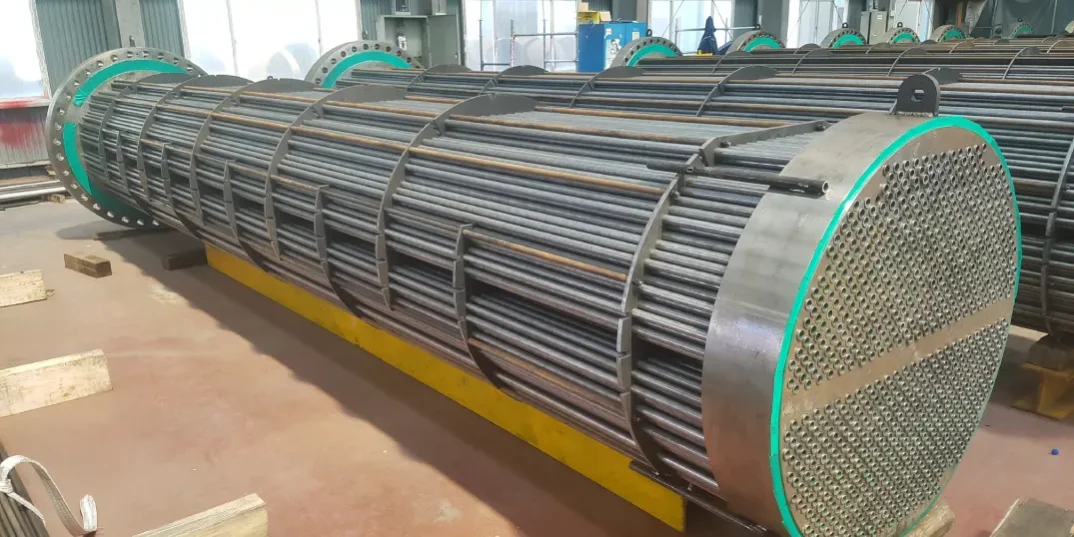
Across commercial and manufacturing facilities, heat exchangers are the workhorses of thermal management. At the center of every heat exchanger is one indispensable component: the industrial tube bundle. Whether you manage a hospital central plant, a food processing operation, a university campus utility system, or an industrial facility in the Phoenix Metro, understanding how industrial tube bundles work is the foundation for knowing why your system performs as it does and what to do when it does not.
What Industrial Tube Bundles Are and How They Work
A tube bundle is an assembly of tubes held together by tube sheets, baffles, and support plates, all housed inside a shell. Specifically, hot and cold fluid streams flow on opposite sides of the tube walls, allowing thermal energy to transfer from one stream to the other without the two fluids mixing. As a result, this process underpins nearly every heating, cooling, and condensing application in heavy industry.
The efficiency of this heat transfer process depends on several interconnected variables: tube wall thermal conductivity, available heat transfer surface area, fluid flow velocity on both sides of the tube wall, and fouling accumulated inside the bundle. Importantly, each of these variables is directly affected by Arizona’s local operating conditions.
Phoenix Metro’s operating environment stresses industrial tube bundles in four ways:
- Hard water mineral precipitation. Phoenix’s high mineral content deposits calcium and magnesium scale on tube surfaces, progressively narrowing flow passages and reducing the tube wall’s ability to conduct heat efficiently.
- Thermal cycling fatigue. Arizona’s significant daily temperature swings cause repeated micro-expansion and contraction at tube-to-tube-sheet mechanical joints, creating fatigue stress that accumulates over operating cycles.
- Year-round continuous operation. Arizona’s institutional and industrial facilities lack the seasonal maintenance windows that cooler-climate operators use for scheduled bundle inspection and cleaning.
- Aggressive water chemistry. The interaction between Phoenix’s high-TDS municipal supply and metallic tube surfaces creates electrochemical conditions that require careful material selection and ongoing water treatment management to control.
Key takeaway
Industrial tube bundles are precision-engineered assemblies whose geometry, material, and configuration directly determine thermal and mechanical performance. In Phoenix’s demanding operating environment, that precision is not optional.
Material Selection, Fouling, and the Cost of Getting Either Wrong
Material selection for heat exchanger industrial tube bundles depends on process fluids, operating temperatures, and corrosion environment. The most common tube materials include carbon steel, stainless steel, copper-nickel alloys, and titanium. However, each offers a different balance of thermal conductivity, corrosion resistance, and cost.
Regardless of material, fouling remains the most common and costly performance problem in heat exchanger tube bundle operation. Fouling is the buildup of scale, biofilm, corrosion byproducts, or process residues on tube surfaces. As a result, even a thin fouling layer greatly reduces the overall heat transfer coefficient (U-value). This forces the system to consume more energy to deliver the same thermal output.
Operators and engineers should watch for these fouling indicators:
- Rising outlet temperatures on the cold-side fluid with no change in process load
- A measurable increase in pressure drop across the shell or tube side
- Notably, reduced condensate flow in steam condensers and reboilers
- Additionally, higher fuel consumption in boiler feed water preheaters
Routine hydroblasting, chemical cleaning, and periodic inspection of tube walls using eddy current testing are standard maintenance practices for Phoenix industrial tube bundles in high-fouling service. Staying ahead of fouling avoids unplanned shutdowns. Furthermore, it protects the tube bundle from under-deposit corrosion, which can cause premature tube failure.
Key takeaway
Material selection and fouling control are two sides of the same coin. The right tube material reduces fouling risk; the right maintenance program catches it early when it does occur. Phoenix’s water chemistry makes both choices consequential.
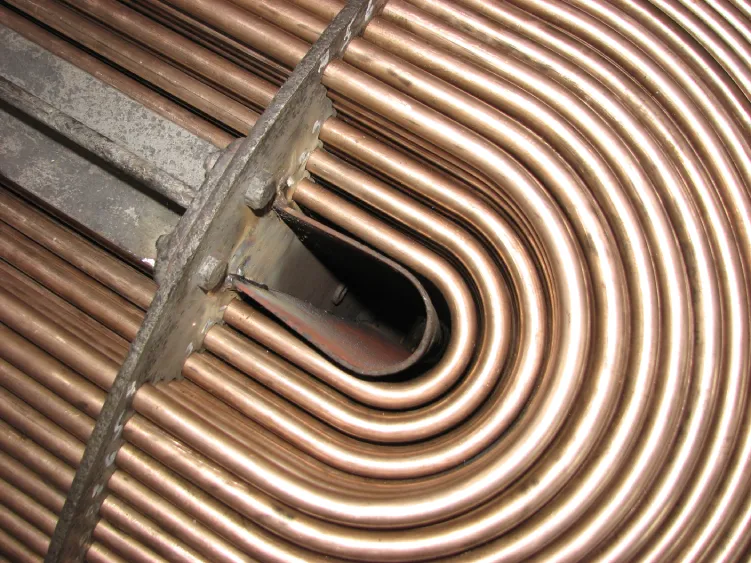
Design Standards, Re-bundling, and When to Replace Industrial Tube Bundles
Industrial tube bundles in Phoenix are designed and manufactured to recognized standards. Most commonly, these include TEMA (Tubular Exchanger Manufacturers Association) and ASME Section VIII for pressure vessel compliance. TEMA classifies exchangers into three service categories: R for severe industrial service, C for general commercial service, and B for chemical process service. Specifically, the classification determines wall thickness tolerances, baffle clearances, and corrosion allowances. For Arizona industrial and institutional facilities, specifying the correct TEMA class from the start is a meaningful decision. In fact, it directly affects both service life and long-term maintenance cost.
A note on double-wall tube bundles: applicable plumbing codes and health regulations in Arizona require double-wall construction in any application where the heat source fluid could contaminate a potable water supply if a tube wall failure occurred. For example, this includes domestic hot water heating in hospitals, hotels, schools, food service operations, and multi-tenant buildings. Facilities that are uncertain about applicable requirements should consult a licensed mechanical contractor. Alternatively, they may contact the local authority having jurisdiction before specifying.
When a tube bundle reaches end of life through corrosion, erosion, or mechanical fatigue, the shell may still be serviceable. In that case, re-bundling is a cost-effective alternative to full heat exchanger replacement. A new bundle, built to the original or upgraded specifications, is fabricated and installed into the existing shell. As a result, it restores full thermal performance at a fraction of the cost of a new unit.
Re-bundling makes the most sense when:
- The shell passes inspection with no significant wall loss or distortion.
- The original bundle failed due to fouling or tube corrosion rather than a design flaw.
- An upgrade in tube material or baffle configuration would improve performance or service life.
- Lead times and budget constraints favor repair over new equipment purchase.
Key takeaway
Re-bundling is a technically sound and budget-conscious strategy when the shell remains serviceable. Knowing the applicable TEMA class and code requirements before the project begins prevents costly surprises during fabrication and inspection.
Tube Bundle Maintenance for Performance & Long-term Reliability
On the maintenance and monitoring side, four practices deliver the greatest return:
- Water treatment chemistry management targeting pH, inhibitor concentration, and TDS levels to protect tube material from electrochemical attack.
- Scheduled tube wall condition assessment using borescope examination, ultrasonic thickness measurement, or eddy current testing. This identifies wall thinning before active failure occurs.
- Periodic mechanical or chemical descaling calibrated to Phoenix’s actual water hardness instead of generic national cleaning intervals.
- Thermal performance monitoring that tracks heat transfer coefficient and approach temperatures over time. Specifically, measurable efficiency degradation serves as an early warning indicator of fouling or developing tube failure.
Key takeaway
The operational difference between a removable tube bundle and a fixed exchanger design is the difference between a scheduled maintenance event and an emergency shutdown. Sound design choices made at specification time directly reduce lifetime maintenance cost and improve operational predictability.
Frequently Asked Questions About Industrial Tube Bundles in Phoenix Arizona
Service life varies widely based on tube material, water chemistry, and operating conditions, but well-maintained bundles in clean service typically last 15 to 25 years. In Phoenix’s hard water environment, bundles in untreated or poorly treated cooling water may degrade significantly in as few as 7 to 10 years. Of these, material selection and water treatment program quality are the two largest factors within an operator’s control.
TEMA recommends establishing a cleaning interval based on the fouling allowance built into the exchanger’s original design, but in practice, most industrial facilities in Phoenix should plan for at least annual cleaning. For example, high-fouling service, such as cooling tower water, process condensate, or hard water supply, may require cleaning every 6 months to maintain acceptable thermal performance. In practice, the best indicator is a measurable rise in pressure drop or decline in heat transfer efficiency.
Re-tubing replaces individual tubes within an existing bundle while reusing the tube sheets, baffles, and support structure. In contrast, re-bundling replaces the entire assembled tube bundle as a unit, including tube sheets and internal components, and is installed into the existing exchanger shell. Re-bundling is typically chosen when damage is widespread or when a design upgrade – such as a change in tube material or baffle configuration – is warranted.
Standard replacement bundles for common exchanger configurations can often be fabricated and delivered in 4 to 8 weeks. However, custom designs, large-diameter shells, or specialty alloy tube materials can extend that timeline to 12 to 20 weeks, depending on material availability. Arizona facilities with aging exchangers are advised to commission a condition assessment before failure occurs so a re-bundle can be planned during a scheduled outage rather than under emergency procurement pressure.
Tube bundle fabrication and repair that falls under ASME pressure vessel code requires an ASME Section VIII U Stamp for new construction or an R Stamp for repair and alteration work. In Arizona, facilities subject to state boiler and pressure vessel regulations should verify that their fabricator holds the appropriate National Board endorsements and that completed work is documented with a data report filed with the National Board. Therefore, working with an uncertified fabricator on pressure-rated equipment creates regulatory and liability exposure for the facility owner.
Conclusion
Phoenix industrial tube bundles are not commodity components. They are precision-specified heat transfer assemblies. Specifically, their material, configuration, and geometric design choices directly determine how reliably and economically a heat exchanger system performs in Arizona’s demanding industrial environment. From material selection to fouling control and re-bundling decisions, every specification choice therefore has direct consequences for plant efficiency, reliability, and operating cost. Ultimately, maintenance programs calibrated to Phoenix’s actual water chemistry and continuous operational demands translate good specification decisions into decades of reliable Phoenix heat transfer system performance.
Patriot Boiler: Arizona’s Industrial Heat Exchanger and Tube Bundle Specialists
When an industrial tube bundle in your Arizona facility requires inspection, cleaning, repair, or replacement, Patriot Boiler brings the R Stamp certification, technical expertise, and local operating knowledge that the work demands. Our certified technicians evaluate tube bundle condition, assess water treatment program effectiveness, and perform ASME-compliant repairs and replacements. Additionally, we build the proactive maintenance programs that keep Arizona industrial and institutional heat transfer systems performing at their best year-round. From Phoenix Metro facilities to industrial operations across the state, Patriot Boiler is consequently the partner Arizona operators trust for heat exchanger system integrity. Learn more about our boiler services in Arizona.