Table of Contents
If your boiler has failed, you are in the right place. Whether you manage a commercial property, a multi-unit building, or a residential home, a sudden boiler breakdown is a critical issue that calls for emergency boiler services that Arizona property owners can count on around the clock. Loss of heat or hot water can quickly lead to tenant complaints, operational disturbances, or equipment damage. Emergency boiler services are designed for these situations, offering rapid diagnosis and restoration when immediate action is required.
While Arizona’s desert climate may appear mild, boiler-dependent properties in the Phoenix Metro, Tucson, and Flagstaff regions can experience significant disruption from system failures. This guide explains how to identify a true boiler emergency, outlines your legal responsibilities as a property owner, details what to expect from a professional response, and provides guidance on selecting the right contractor.
What Qualifies as a Boiler Emergency?
Not every boiler issue requires a 3 a.m. call, but some situations demand immediate professional attention. Knowing the difference protects your property, occupants, and equipment — and knowing who to call for emergency boiler services Arizona property owners trust starts with understanding what qualifies as a true emergency.
Situations that require emergency boiler repair right away:
- Gas odor near the boiler or boiler room. Evacuate immediately, shut off the gas supply, and contact your gas provider and a licensed technician before re-entering.
- Carbon monoxide alarm activation. Carbon monoxide is an odorless, colorless byproduct of incomplete combustion and can be fatal. Treat every CO alarm as a confirmed emergency.
- Yellow or orange pilot flame instead of a steady blue. This indicates incomplete combustion and potential carbon monoxide production.
- Steam or water discharging from the pressure relief valve. This indicates system pressure has exceeded the safe threshold of 30 PSI and the safety valve is venting.
- Persistent system lockout. If the boiler repeatedly enters lockout mode and will not restart, this safety mechanism signals a serious underlying fault.
- Visible water leaks from the heat exchanger, circulator pump, or supply piping. Even slow leaks indicate corrosion, seal failure, or component breakdown that can worsen quickly.
- Complete loss of heating or hot water in an occupied building, especially during cold nights in higher-elevation Arizona communities.
📌 Don’t Touch That Reset Button – Get Out and Call Now. If you smell gas, see steam venting, or hear your CO detector sound, do not attempt to reset the system. Evacuate and call for emergency boiler repair immediately.
What Arizona Property Owners and Landlords Are Legally Required to Do
A boiler failure is not just an operational problem for Arizona landlords – it is a legal obligation. Under the Arizona Residential Landlord and Tenant Act (ARLTA), heating and hot water are classified as essential services. Landlords are required to respond within 24 hours when these services are interrupted in an occupied rental property. Failure to act promptly gives tenants the right to arrange repairs themselves and deduct the cost from rent.
Beyond tenant law, Arizona Administrative Code R20-5-410 requires owners, users, and operators to immediately notify ADOSH in the event of a boiler explosion, severe overheating, or personal injury involving a boiler or lined hot water storage heater.
Many property owners are unaware of this reporting obligation until after the fact. Non-compliance can result in certificate blocking violations and regulatory action. A qualified emergency boiler services provider should guide you through this notification process as part of their response.
Documentation best practices after an emergency boiler repair:
- Retain all repair invoices, work orders, and technician reports for a minimum of seven years.
- File any required ADOSH incident notifications promptly and retain copies.
- Record before and after photographs of the affected components and boiler room
- Update your boiler maintenance log with the date, nature of the failure, repairs performed, and parts replaced.
- Confirm receipt of a post-repair inspection certificate or ADOSH notification confirmation before returning the system to full operation.
📌 24 Hours Is the Law – Ignorance Is Not a Defense Arizona landlords must respond to boiler failures within 24 hours as a legal obligation, and all operators must report serious boiler incidents to ADOSH immediately under R20-5-410.
Immediate Steps Before the Technician Arrives
Taking the right steps in the first few minutes of a boiler emergency can prevent injury, limit property damage, and assist your technician in diagnosing the problem quickly. These steps apply to both residential and commercial systems.
What to do during a boiler emergency:
- Shut down the system using the main power isolator or emergency stop, which is typically located near the boiler room entrance on commercial properties.
- Close the gas supply valve if you suspect a gas leak or smell fuel. The valve is typically located on the gas line feeding the burner assembly.
- Do not repeatedly reset a locked-out boiler – overriding the lockout bypasses critical safety features such as the low-water cutoff and flame safeguard controls.
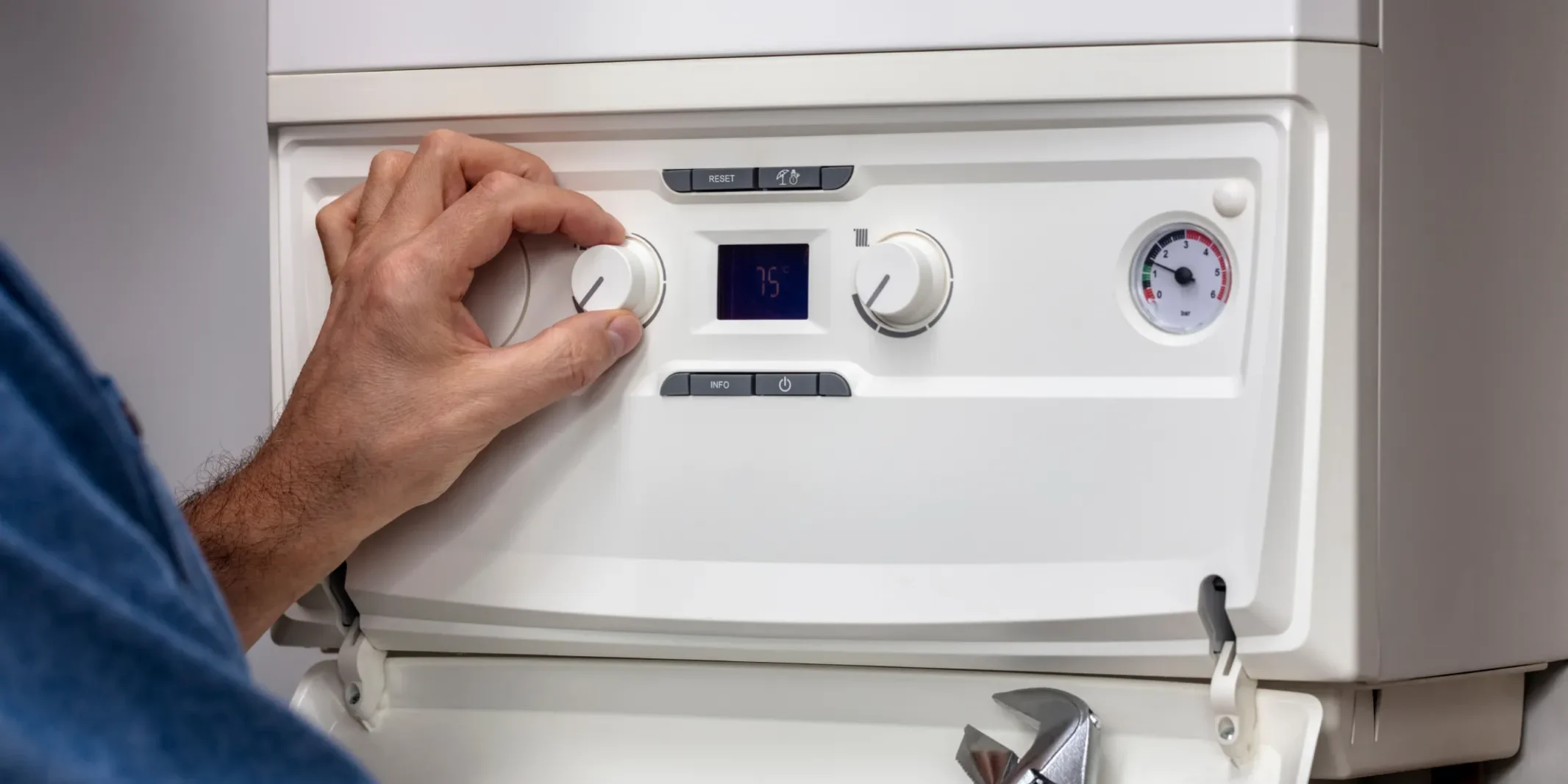
- Note any fault codes or error displays on the boiler’s control panel, as these give your technician a head start on diagnosing the issue.
- Document visible symptoms, including unusual sounds, leak locations, pressure gauge readings, and any recent changes in system behavior.
- Ventilate the boiler room if you suspect gas accumulation or combustion gas spillage from the flue.
- Alert building occupants and restrict access to the boiler room until a qualified technician has assessed the situation.
📌 The First Ten Minutes Determine the Outcome. The actions you take in the first 10 minutes of a boiler emergency directly affect how quickly your system can be safely returned to service.
How to Choose a Qualified Emergency Boiler Services Provider in Arizona
When a boiler fails, the urgency to restore service can lead property owners to call the first available contractor. However, hiring an unqualified contractor for pressure vessel repairs can result in unsafe work, voided warranties, failed ADOSH inspections, and significant liability — which is why choosing the right emergency boiler services Arizona contractors are certified to perform makes all the difference.
What to verify when choosing an emergency boiler repair contractor in Arizona:
- National Board R Stamp certification. Arizona requires boiler repairs to be performed by technicians with an R Stamp from the National Board of Boiler and Pressure Vessel Inspectors. This credential confirms adherence to a documented quality control program and ASME Boiler and Pressure Vessel Code standards. Hiring an uncertified contractor for weld repairs or pressure-retaining component work is a compliance violation that can block your Certificate of Operation.
- ADOSH familiarity. Your contractor should understand Arizona’s boiler compliance requirements, including inspection protocols, mandatory reporting, and which repairs require a third-party inspection before the system returns to service.
- 24/7 genuine availability. Confirm the provider offers staffed emergency response at all hours, not just an answering service that dispatches the next day.
- Fully stocked service vehicles. Common failure components, such as gas valves, pressure sensors, low-water cutoffs, ignition electrodes, and circulator pump seals, should be on the service vehicle to enable immediate repairs.
- Verifiable experience with your system type. Steam boilers, hydronic systems, high-pressure power boilers, and commercial hot water systems each have unique components and failure modes. Confirm your provider has documented experience with your specific equipment.
- Documented repair records — a reputable contractor provides written work orders, parts documentation, and a post-repair commissioning report as standard practice
📌 Speed Without Credentials Is Just Risk in a Hurry. In Arizona, boiler repairs must be performed by an R Stamp-certified technician. Verifying this credential before an emergency protects your compliance, your warranty, and your occupants.
What to Expect from Professional Emergency Boiler Services
When you request 24/7 emergency boiler repair, a qualified technician should arrive with a fully stocked service vehicle, appropriate diagnostic equipment, and the credentials to perform safe, code-compliant work on Arizona boiler systems. While speed is important, competence and safety are essential.
A professional emergency response should include:
- Rapid system assessment covering boiler pressure, flue integrity, combustion quality, and control system status before any repairs begin
- Combustion analysis to confirm safe fuel-air ratios and verify the burner is not producing dangerous levels of carbon monoxide or unburned hydrocarbons
- Component-level diagnosis of the heat exchanger, expansion vessel, circulator pump, low-water cutoff, pressure relief valve, and electronic controls
- Parts availability from a stocked service vehicle, ensuring common failure components are on hand for same-visit repair.
- Code-compliant repairs in accordance with the ASME Boiler and Pressure Vessel Code and Arizona ADOSH requirements, including proper documentation if your system has an active inspection certificate.
- ADOSH incident notification guidance if the failure involved explosion, severe overheating, or personal injury requiring mandatory reporting under R20-5-410
- System commissioning before the technician leaves, confirming correct operating pressure, stable flame, safe flue gas temperatures, and proper safety device function.
📌 A Reset Is Not a Repair — Demand the Full Fix. Expect your emergency technician to diagnose, repair, commission, and document your system fully before leaving — not just reset it and hope for the best.
Common Boiler Failures Behind Emergency Calls in Arizona
Arizona’s hard water, significant temperature swings, and heavy demand on hydronic systems for radiant floor heating create specific failure patterns that technicians encounter regularly.
The most common causes of emergency boiler breakdown in Arizona:
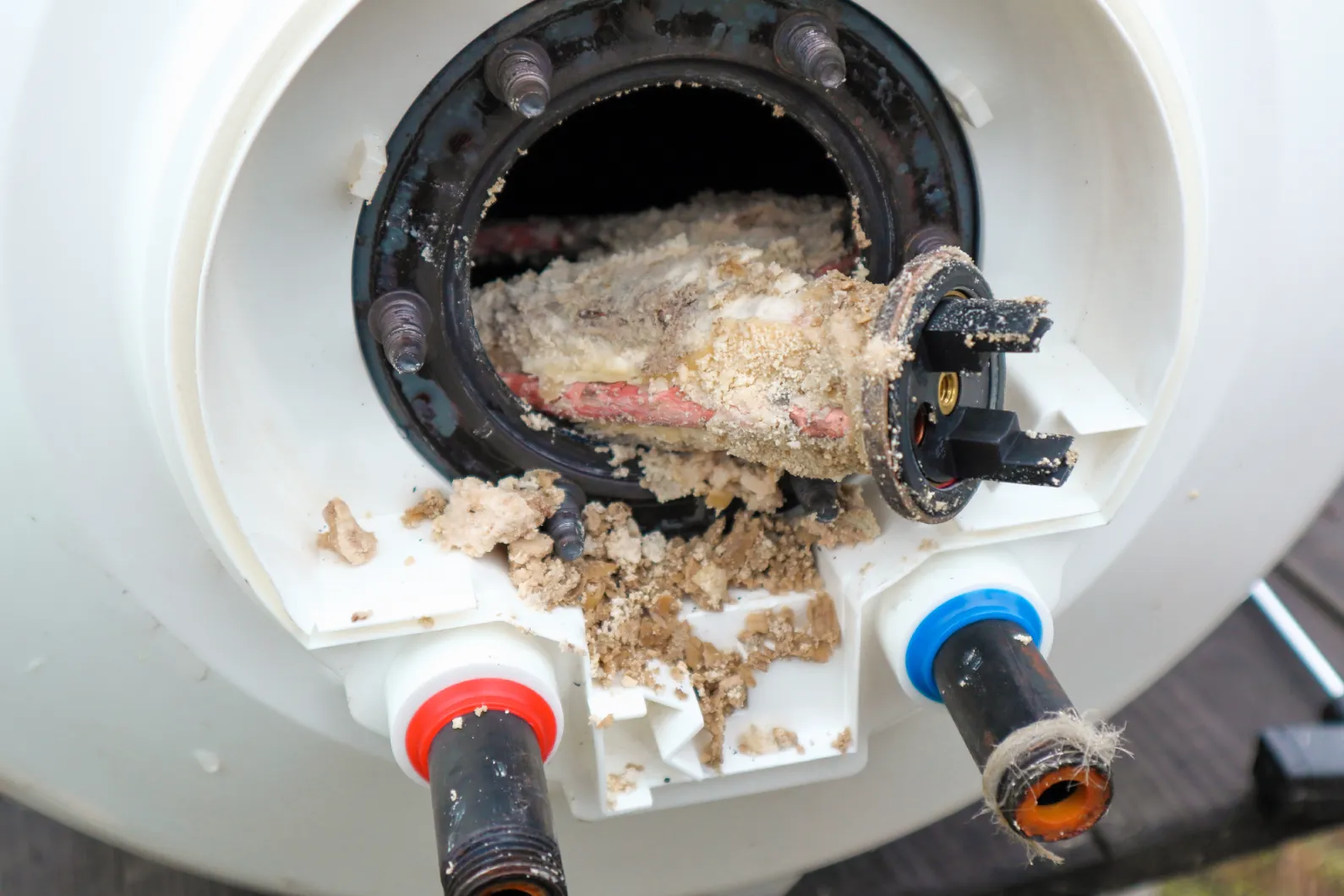
- Limescale and mineral deposit buildup on heat exchanger surfaces due to Phoenix Metro’s hard water. This acts as an insulating layer and causes overheating, kettling noises, and heat exchanger failure.
- Circulator pump failure from extended operation, cavitation, or bearing wear, resulting in loss of flow and overheating lockout conditions.
- Failed expansion vessel membrane, causing rapid pressure cycling, frequent relief valve discharge, and waterlogged system conditions.
- Low-water cutoff malfunction on steam systems, which can allow dangerously low water levels to go undetected.
- Gas valve or ignition system failure, resulting in repeated ignition lockouts and a boiler that starts and stops without establishing a stable flame.
- Flue blockage or draft failure, which causes combustion gases to spill back into the boiler room and triggers safety shutdowns. In Arizona, dust accumulation and pest activity are common contributors.
- Condensate line freeze in Flagstaff and higher-elevation Arizona communities during winter, which forces the boiler into lockout.
📌 Arizona’s Climate Is Hard on Boilers – Know Your Weak Points. Arizona’s hard water and unique climate make limescale management, expansion vessel maintenance, and flue inspection critical to preventing emergency boiler breakdowns.
Repair vs. Replacement: How to Know Which You Need
Not every emergency boiler services call results in a repair. In some cases, replacement is the safer and more cost-effective option. Understanding the factors involved helps property owners make informed decisions under pressure.
Consider boiler replacement over repair when:
- The heat exchanger is cracked or corroded – this is generally an uneconomical repair and a safety concern, given the risk of combustion gas contamination.
- The system is 15 years or older and has experienced multiple emergency repairs within a short period.
- Replacement parts are no longer available from the manufacturer, making reliable long-term repair impossible.
- The boiler has failed its ADOSH certificate inspection, and correcting the violations would require an investment close to replacement value.
- A high-efficiency condensing boiler would significantly reduce ongoing operating costs compared to keeping an aging, low-efficiency system running.
When replacement is necessary, a qualified contractor should assess your building’s load requirements, specify properly sized equipment, and coordinate temporary heating solutions such as portable boiler rentals or electric supplemental systems to minimize tenant disruption and operational downtime.
📌 Throwing Good Money After Bad Is Still Money Gone. If your boiler is old, repeatedly failing, or structurally compromised, emergency boiler replacement may deliver better long-term value and safety than continued repair.
How Preventive Maintenance Reduces Emergency Boiler Calls
The best emergency boiler service is the one you never need. Routine boiler maintenance by a qualified technician significantly reduces the risk of unexpected failures and helps Arizona property owners avoid the emergency boiler services Arizona weather extremes and hard water conditions make all too necessary.
A proactive maintenance program for Arizona boiler systems should include:
- Annual combustion analysis and burner tune-up to optimize fuel-air ratios and verify safe carbon monoxide levels
- Heat exchanger inspection and chemical descaling to address limescale buildup caused by hard water.
- Expansion vessel pressure check and recharge to prevent waterlogging and pressure relief valve cycling.
- Low-water cutoff testing and blowdown on steam systems to verify safety device function
- Circulator pump inspection, bearing lubrication, and impeller assessment.
- Flue and venting inspection to confirm clear draft and proper combustion gas exhaust.
- Review of operating logs for pressure trends, temperature anomalies, and recurring fault codes that may indicate developing problems.
📌 The Best Emergency Call Is the One You Never Have to Make. Scheduled maintenance is the most reliable and cost-effective way to prevent emergency boiler repair calls in Arizona.
Frequently Asked Questions About Emergency Boiler Services in Arizona
What should I do if my boiler shows a fault code and will not restart?
Does Arizona require an R Stamp for boiler repairs?
How quickly can I expect an emergency boiler technician to arrive in Arizona?
As an Arizona landlord, what are my obligations when a boiler fails?
Can I use my boiler if it is leaking water?
When should I replace rather than repair my boiler?
Conclusion
A boiler emergency demands fast action, clear thinking, and a trusted contractor with the credentials to back it up. For Arizona property owners and landlords, that means understanding the warning signs of a crisis, knowing your legal obligations under state law, verifying that your contractor holds the required R Stamp certification, and maintaining the documentation that keeps your property compliant and protected.
Regular preventive maintenance remains the most effective strategy for avoiding emergency boiler repair — but when a breakdown does happen, you deserve a team that responds quickly, works to code, and handles every step from diagnosis to ADOSH notification.
Patriot Boiler: Arizona’s Emergency Boiler Services Specialists
When your boiler fails, every minute counts. Patriot Boiler offers 24/7 emergency boiler services for commercial and residential property owners throughout Arizona. Our R Stamp-certified technicians are experienced in steam systems, hydronic heating, high-pressure boilers, and Arizona ADOSH compliance. From emergency repairs and component replacement to full boiler replacement and preventive maintenance, Patriot Boiler delivers the full range of boiler services in Arizona. Our expertise, credentials, and rapid response that Arizona property owners rely on, day or night.