Running a commercial facility in Arizona comes with many responsibilities, and meeting commercial boiler inspection requirements is one you can’t overlook. Arizona enforces clear inspection rules to protect your staff, property, and the public. The good news? Once you understand what’s required, staying compliant is straightforward.
Who’s in Charge of Boiler Inspections in Arizona?
The Arizona Division of Occupational Safety and Health (ADOSH), operating under the Industrial Commission of Arizona, oversees the state’s boiler inspection program. It enforces the Arizona Boiler Act along with the Arizona Administrative Code. These rules apply to virtually all commercial boilers installed and operating across the state.
Does Your Boiler Need to Be Inspected?
Most commercial boilers in Arizona are required to be inspected, but a few exceptions exist. The following are generally exempt:
- Boilers are regulated by the federal government.
- Boilers in private residences or small apartment complexes (6 units or fewer)
- Boilers on Indian reservations
- Smaller lined hot-water heaters under specific BTU, temperature, and capacity thresholds
If your commercial boiler doesn’t fall into those categories, it is subject to Arizona’s inspection and certification requirements without exceptions.
Installing a New Boiler? Here’s What to Do First
If you’re setting up a new commercial facility or replacing old equipment, don’t wait until after installation to consider compliance. Arizona requires owners, users, or licensed contractors to request a certificate inspection before operating any newly installed or reinstalled boiler. You also need the Manufacturer’s Data Report on-site and must meet all clearance requirements in the Arizona Administrative Code. Getting this right from the start saves costly delays and keeps your project on schedule.
How Often Does Arizona Require Inspections?
Inspection frequency depends on the type and pressure rating of your boiler. Here’s a simple breakdown:
- Power boilers (over 15 psi): Annual internal inspection + external check every ~6 months
- High-temperature hot-water boilers (over 160 psi or 250°F): Once per year
- Heating or process boilers (15 psi or under): Every two years
- Standard hot-water boilers (under 160 psi or 250°F): One-time initial inspection only
Missing a scheduled inspection not only creates a safety risk but can also lead to your Certificate of Operation being withheld, meaning your facility cannot legally run that equipment.
How to Prepare for Your Boiler Inspection
Preparation goes a long way toward a smooth, stress-free inspection. Before your inspector arrives, make sure you have the following ready:
- Manufacturer’s Data Report and equipment nameplate accessible
- Previous inspection records and your current Certificate of Operation
- Safety devices tested and functional – relief valves, low-water cutoffs, and emergency stops
- Boiler area cleared and available for both internal and external examination.
- Qualified attendant on-site if you’re operating a power boiler
Being prepared not only speeds up the process but also reduces the risk of violations that could delay your certification.
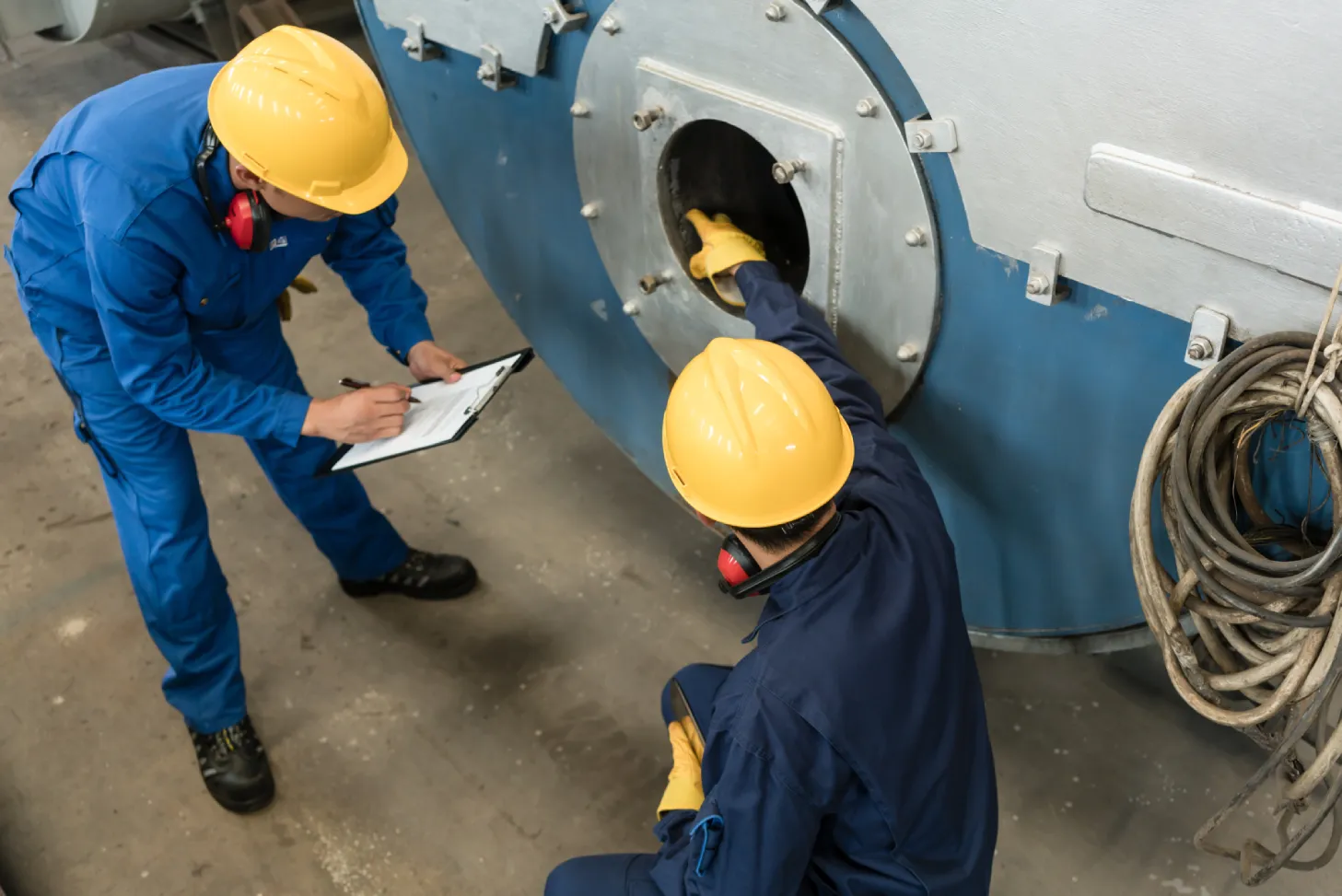
Who Is Allowed to Inspect Your Boiler?
Since July 2017, the state of Arizona no longer performs boiler inspections itself. All inspections must be carried out by ADOSH-authorized third-party inspection agencies. These inspectors must follow the National Board Inspection Code, and any repair work must be done by a technician certified with an “R” Stamp from the National Board of Boiler and Pressure Vessel Inspectors. Working with a qualified, authorized provider protects your business and keeps your certification valid.
What If Your Boiler Fails Inspection?
Failing an inspection sounds alarming, but it does not have to derail your operations for long. Arizona’s boiler program issues cease-and-desist orders rather than monetary fines, meaning you won’t face financial penalties but must correct the issues before your Certificate of Operation is restored. In serious cases, a boiler can be red-tagged or condemned, requiring all deficiencies to be resolved before it can legally operate again. The key is acting quickly — the faster violations are addressed, the sooner you’re back up and running.
What Happens After a Successful Inspection?
Passing your inspection is just the beginning. Arizona law requires commercial boiler operators to:
- Display the inspection certificate on-site at all times (R20-5-407)
- Obtain and renew your Certificate of Operation through the state’s online portal.
- Immediately report any boiler explosion, overheating, or injury to ADOSH (R20-5-410)
- Keep a qualified attendant on duty whenever a power boiler is operating (R20-5-417-D)
Staying on top of these requirements keeps your facility safe, your team protected, and your business out of trouble.
Conclusion: Compliance Is an Investment, Not a Burden
Arizona’s commercial boiler inspection requirements exist for one reason — to keep people safe and businesses running. Staying on top of your inspection schedule, knowing what to prepare, and understanding what to do when things go wrong puts you firmly in control of your facility’s operations. Whether you manage one boiler or many, treating compliance as a routine part of your business, rather than a last-minute scramble, saves you time, money, and stress in the long run.
Don’t Risk Non-Compliance – Let Patriot Boiler Handle It
Navigating Arizona’s commercial boiler inspection requirements doesn’t have to be stressful. At Patriot Boiler, we specialize in keeping Arizona commercial facilities fully compliant, safe, and operational through our full range of boiler services in Arizona. Whether you need a pre-inspection prep review, a scheduled certificate inspection, or fast remediation after a failed inspection, our team is ready to help.
Have questions about your specific boiler setup? Contact Patriot Boiler for a free consultation and let our experts handle the compliance so you can focus on running your business.